
Degenerative Disc Disease Treatment in Sturgis
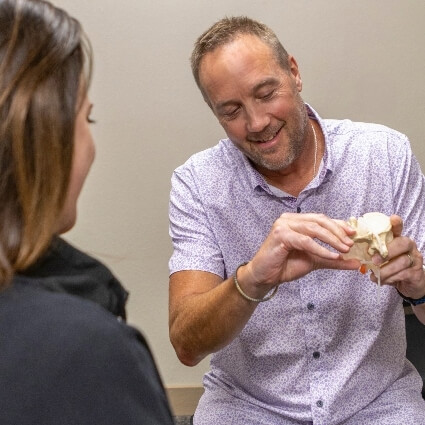 Degenerative disc disease (DDD) is one of the most common spinal conditions in adults, yet many people are unaware they have it until symptoms become significant. By our mid-30s, nearly a third of people show early signs of disc degeneration on imaging. By age 60, more than 90% of us have some degree of it. DDD refers to the gradual breakdown of the cushioning discs between the spinal vertebrae — a process driven by aging, previous injuries, and the cumulative effects of gravity.
How Degenerative Disc Disease Develops
The spinal discs act as shock absorbers between the vertebrae, each consisting of a gel-like inner core surrounded by a tough outer ring. That inner core is approximately 80% water in youth, but dries out progressively with age — one reason people tend to lose height over time. As the discs thin and lose flexibility, greater stress is placed on the outer ring, which can begin to bulge and press against nearby nerves. In some cases, the inner core pushes through a tear in the disc wall entirely, releasing inflammatory proteins that irritate surrounding nerve tissue. The body may also respond by forming bone spurs, which can further crowd the spinal canal and contribute to nerve compression.
DDD most commonly develops in the lumbar (lower back) region due to the significant weight it bears, but it can also occur in the cervical spine (neck) and thoracic spine (mid-back). Like a dental cavity that causes no discomfort until well advanced, DDD can progress silently for years before producing noticeable symptoms.
Symptoms of Degenerative Disc Disease
Many people with DDD experience no symptoms at all in the early stages, while others develop significant pain as the condition advances. When symptoms are present, they vary by location and severity. Common experiences include a dull, persistent ache or sharp, burning pain in the affected spinal region, pain that radiates into the buttocks or legs (sciatica), and stiffness or reduced range of motion. Sitting typically aggravates DDD pain because it increases pressure on the discs, while lying down often provides relief. Bending, twisting, and prolonged standing on hard surfaces can also intensify discomfort.
Chiropractic Treatment for Degenerative Disc Disease
Of the 22 million Americans who visit a chiropractor each year, approximately one third do so for back pain — and many of those patients have some degree of DDD. At Key City Chiropractic & Acupuncture, Dr. Goebel uses a range of evidence-informed techniques to soothe irritated spinal nerves, improve joint mechanics, reduce inflammation, and help the spine move more freely. Treatment may include:
- Spinal manipulation: Precise, controlled adjustments to joints that have lost normal mobility, restoring motion and reducing nerve irritation
- Flexion-distraction technique: A gentle, non-thrusting form of spinal manipulation performed on a specialized table, particularly effective for herniated discs and spinal stenosis associated with DDD
- Instrument-assisted manipulation: A low-force technique using a handheld instrument to apply targeted, gentle pressure to specific spinal segments
- Trigger point therapy: Direct pressure applied to tense, knotted muscles along the spine to release tension and reduce referred pain patterns
- Interferential electrical stimulation: Low-frequency electrical current to stimulate spinal muscles and reduce inflammation around degenerating disc segments
- Ultrasound therapy: Deep sound wave treatment that generates mild therapeutic heat to ease muscle spasm, reduce stiffness, and improve circulation in affected areas
- Therapeutic exercise: Customized home exercise programs to reinforce in-office care, build spinal support, and help slow the progression of disc degeneration
What You Can Do to Protect Your Spine
While disc degeneration cannot be reversed, it can be slowed — and its symptoms managed effectively over the long term. Think of spinal care the way you think of dental care: regular maintenance and professional checkups go a long way toward preventing serious problems down the road. Staying active, avoiding prolonged sedentary periods, maintaining a healthy weight, and seeing Dr. Goebel for regular chiropractic care are all powerful tools for protecting your spine. Regular chiropractic visits also allow Dr. Goebel to detect early changes in spinal health before they develop into significant problems — even when you feel fine. In advanced cases where degeneration requires surgical evaluation, Dr. Goebel will help facilitate the appropriate referral.
Schedule Your Appointment
If you are experiencing back or neck pain in Sturgis and suspect degenerative disc disease may be a factor, contact Key City Chiropractic & Acupuncture today to schedule an evaluation with Dr. Goebel and take a proactive step toward a healthier, more comfortable spine.
CONTACT US
